
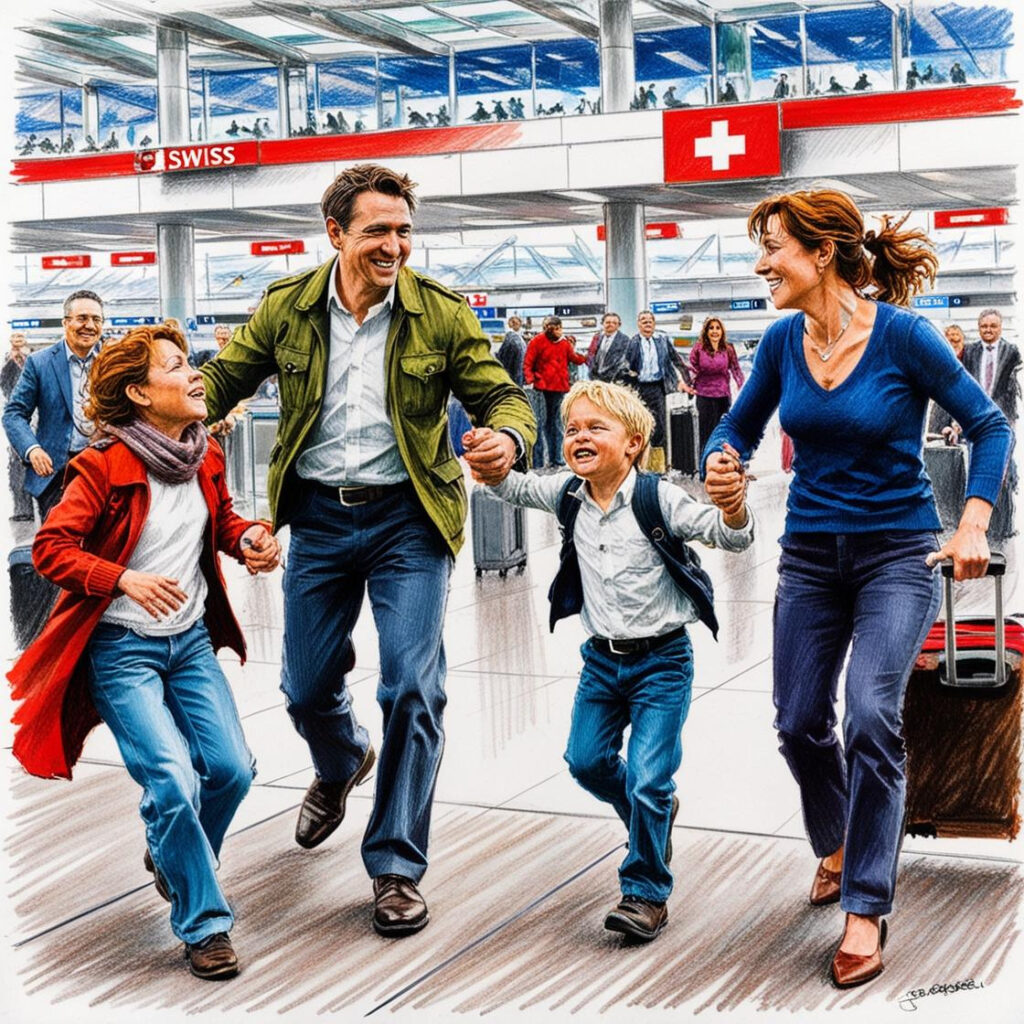
Bringing Your Family to Switzerland: An Insight into Family Reunification
If you’re already living in Switzerland and are eager to bring your loved ones over, understanding the nuances of family reunification is key. Let’s dive into the Swiss immigration laws to see how you can make this happen while keeping it all nice and casual.
Understanding Family Reunification
Family reunification is a process that allows a person legally residing in Switzerland to bring their immediate family members into the country. It’s designed to help families stay or come together, especially when one member has already set foot in the Swiss paradise.
EU/EFTA nationals and non-EU nationals are subject to different laws and therefore different requirements. If you are Swiss and need to apply for a family reunification, you need to consider the nationality of your family member: are they a national from a EU/EFTA country or not?
Which law applies to whom?
- You’re Swiss and your family member is a EU/EFTA citizen -> Agreement on the free movement
- You’re Swiss and your family member is a non-EU/EFTA citizen (even if they have a EU/EFTA-residence permit!) -> Aufenthaltsgesetz (if the translation is still not available in English, change the language on top of the page to see the other languages)
- You’re a EU/EFTA citizen living in Switzerland -> Agreement on the free movement
- You’re a non-EU/EFTA citizen living in Switzerland -> Aufenthaltsgesetz (if the translation is still not available in English, change the language on top of the page to see the other languages)
Who Can Apply?
To kick things off, you’ll need to know who qualifies as a family member under Swiss law. Typically, it includes:
- Spouse or Registered Partner: Your better half or officially recognised partner.
- Children or grandchildren: Both yours and your spouse’s children, provided they are unmarried, financially dependent and under the age of 18 (or 21 if you are a EU-citizen).
- Parents or grandparents: This is only possible for EU-citizens, and only if the parents/grandparents depend on you.
Requirements
Now, let’s get your paperwork game strong. Here’s the simplified route you need to take:
- Initiate the Application: The person already residing in Switzerland has to file the request with the cantonal migration office. Remember, each canton might have its own set of additional regulations.
- Documents, Documents, and More Documents: Gather essential documents like passports, marriage certificates, and birth certificates.
- If you’re European, ask for the international version of marriage and birth certificates.
- If you’re non-European, you might have to get an official translator to translate the documents into one of Switzerland’s official languages (German, French, or Italian).
- Housing Proof: You’ll need to show that your current accommodation is suitable and large enough for the whole family.
- Financial Stability: Proving you can financially support your family is crucial. (in theory, this is not a requirement for those under the free movement agreement) So, make sure to prepare your last few income statements, job contracts, and sometimes even bank statements.
Possible Hiccups
It’s not all rainbows and chocolate, though, as a few hurdles might come your way:
- Language Requirements: Some cantons have a language requirement. Your spouse or children might need to demonstrate basic knowledge of a national language.
- Integration Criteria: Being part of Swiss society is a big deal. Authorities might assess how well integrated you or your family members are, or they might require you to attend integration courses.
- Wait Times: Patience is key. The process can be lengthy, sometimes taking several months or longer.
Special Considerations
If you’re a non-EU/EFTA national, the path may be a little more winding. Often, your residence permit type and length of stay in Switzerland also dictate the process.
Country-Specific Regulations: Some countries have bilateral agreements with Switzerland that might ease or complicate the process, so always check those particulars.
Timing
Generally, applications for family reunification must be made within five years of you living in Switzerland, or if you are Swiss, of the beginning of your family bond (marriage, birth, adoption).
For children, you must apply for the reunification within 12 months of living in Switzerland (this is meant to ensure that their integration is as quick as possible).
What kind of permit will my family member receive?
According to the free movement agreement (check above), the family member will get a permit matching to the person already residing in Switzerland. So, whether you have a permit lasting four years or four months, your family member will get a permit with the same due date. Their permit will also have the same conditions, allowing them to also search for a job.
The only exception is if you already have a C-permit and you get married and want to bring your partner. They won’t get a C-permit, they will however get a B-permit with the same due date.
According to the federal act on foreign nationals, if you have a C-permit or you are Swiss, your family members will receive a B-permit, which also gives them the right to work in Switzerland. If you are a non-EU/EFTA citizen with a B or L-permit, your family member might receive a more limited permit.
Pets
Your pets do not require such massive paperwork, but I’m sure your cat, dog or hamster is also an important family member to you.
If you want to bring your pet to Switzerland, please make sure that you start preparing early on. Check if pets are allowed in your building and if you have enough space for them. If you are considering bringing them by plane, check which companies carry pets (a lot of companies and airports don’t do it – as far as I know, Geneva and Zurich are the only swiss airports to manage animal transportation).
Requirements for cats, dogs and ferrets:
- microchip: pets must have a microchip before entering Switzerland (exceptions for medical reasons are possible, if confirmed by a vet)
- EU pet passport: cats, dogs and ferrets coming from EU-countries must have an EU pet passport issued by the vet. This won’t be necessary for small pets (birds, rodents, etc)
- non-EU pets: you’ll need to ask your vet for a document confirming your pet’s health situation, aswell as an official document confirming that you own your pet. This might vary from country to country.
- rabies vaccine: your cat, dog or ferret must be vaccinated no later than three weeks before travelling. If your country is considered to be at higher risk of rabies, you might also have to provide a blood test result (check here for further details)
- vet in Switzerland within 10 days of your arrival: pets, mainly dogs, must be registered in Switzerland. The registration must be done within 10 days, as soon as you arrive.
Some cantons might have restrictions for dog breeds, that are considered dangerous. Make sure you are informed in due time.
Cropped tails or ears are not allowed in Switzerland. If your dog has clipped ears or tail, contact a veterinarian in Switzerland or the customs to see if there is a way around it.
Smaller pets such as birds, rodents, reptiles are usually easier to import, unless they are on the list of protected species. Check with customs just in case.
Pet insurance
Once your pet is home with you, consider getting a pet health insurance. The vet bills can get salty in Switzerland…
If you have a dog, you should get a “Hundehaftpflichtversicherung“, which would cover any damages your dog might cause to other people, animals or things. It’s not always mandatory (check here), but I would recommend it.
Staying Positive
It might seem like a mountain of work at first, but plenty have climbed it before you. Reach out to local expat communities or online forums—you’ll find stories, tips, and lots of encouraging folks who’ve been through the same.
Final Thoughts
Family reunification in Switzerland, while demanding, is a deeply rewarding process. With some persistence and a dash of Swiss efficiency, you’ll soon be enjoying Toblerones and hosting fondue nights with your loved ones in no time.
So, buckle up, stay organised, and soon enough, your family will be shouting “Grüezi” together in your new Swiss adventure!


