
Advent and Christmas Traditions in Switzerland
Switzerland’s Advent and Christmas season is one of the most magical times of the year. For immigrants and expats, discovering these traditions is a wonderful way to understand local culture and feel more at home. In this guide, you’ll learn about the most important Swiss holiday customs—from Advent wreaths to Christmas markets, St. Nicholas Day, festive foods, and how different regions celebrate.
What Makes Swiss Advent and Christmas Traditions Unique?
Switzerland blends German, French, and Italian influences, creating a festive season with cozy rituals, community gatherings, and regional nuances. The celebrations begin early, often in late November, and continue well past Christmas Day.
Advent in Switzerland: The Start of the Festive Season
Advent Calendars (Adventskalender)
Opening an Advent calendar door each day is a cherished tradition.
Families use:
-
Chocolate Advent calendars
-
Handmade wooden or fabric calendars
-
Activity-based calendars for children
This simple ritual builds excitement leading up to Christmas Eve.
Advent Wreaths (Adventskranz)
Most households display an Advent wreath with four candles. One candle is lit each Sunday before Christmas, creating a cozy and reflective Sunday routine throughout December.
Swiss Christmas Markets: A Must for Everyone
Christmas markets (Weihnachtsmärkte / marchés de Noël) are among the most iconic Swiss Advent experiences.
Popular Swiss Christmas Markets
-
Basel: One of Europe’s top-rated markets
-
Zurich: Several markets, including a singing Christmas tree
-
Montreux: Famous lakeside market with Santa “flying” overhead
-
Bern, Lucerne, St. Gallen: Beautiful historic settings
Markets are ideal for:
-
Buying handmade gifts
-
Sampling raclette and mulled wine
-
Experiencing local culture
-
Practicing German, French, or Italian
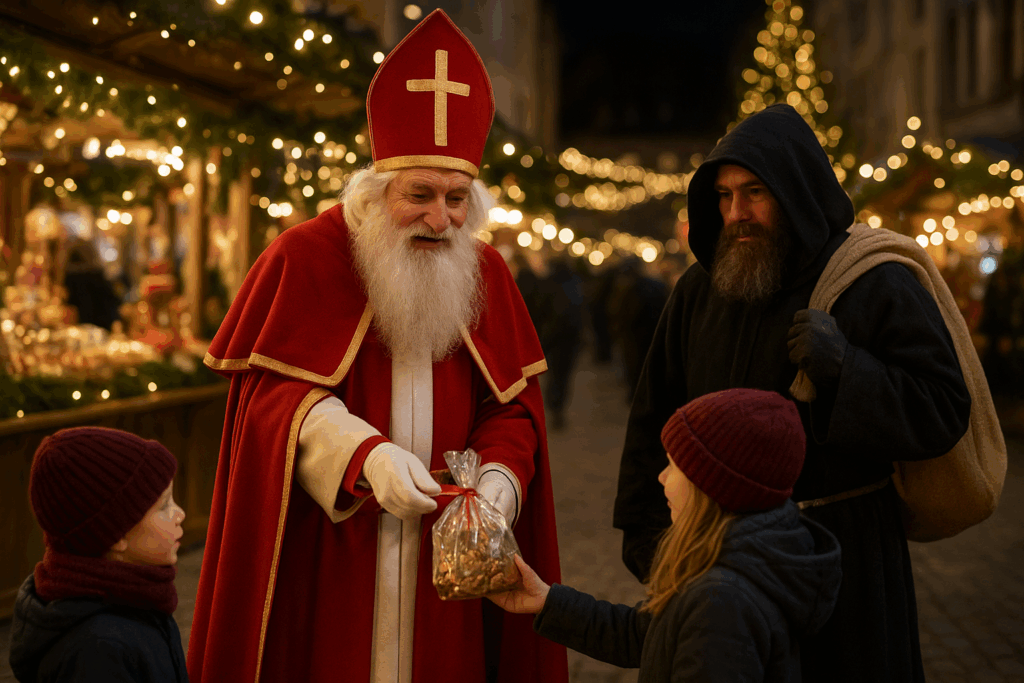
6 December: St. Nicholas Day (Samichlaus and Schmutzli)
On 6 December, Swiss children meet Samichlaus, the Swiss version of Saint Nicholas. Unlike Santa Claus, he doesn’t bring toys—he brings encouragement, evaluates children’s behavior, and hands out small goodie bags called Chlaussäckli.
He appears with:
-
Schmutzli / Père Fouettard (his helper, who handles the naughty children)
-
A donkey carrying nuts, gingerbread, and mandarins
This tradition is especially strong in German-speaking regions and is a highlight for families.
Typical Swiss Christmas Foods
Classic Swiss Holiday Dishes
-
Fondue & Raclette: Winter comfort foods perfect for cozy evenings
-
Grittibänz: A sweet bread shaped like a little person, eaten around St. Nicholas Day
-
Christmas cookies (Guetzli):
-
Zimtsterne
-
Brunsli
-
Mailänderli
-
Drinks and Seasonal Treats
-
Mulled wine (Glühwein / vin chaud)
-
Roasted chestnuts
-
Gingerbread & festive chocolates
These foods create a warm and communal feeling throughout the season.
How Swiss Families Celebrate Christmas Eve and Christmas Day
Christmas Eve (24 December)
This is the main celebration day for most Swiss families. Traditions include:
-
Decorating the Christmas tree (often with real candles)
-
Enjoying a festive dinner
-
Exchanging gifts (Bescherung)
-
Attending church services or singing carols
Christmas Day (25 December) & St. Stephen’s Day (26 December)
Both are mostly public holidays, so most shops are closed, and families spend quiet time together. Many expats are surprised by how peaceful and slow-paced these days feel—so remember to plan ahead.
Regional Christmas Traditions in Switzerland
German-Speaking Regions
-
Strong Samichlaus traditions
-
Real candles on Christmas trees
-
Many Advent events and family-centered customs
French-Speaking Regions (Romandie)
-
French-inspired Christmas celebrations
-
Gourmet-style markets and festive foods
-
Some families celebrate more on 25 December than the 24th
Italian-Speaking Canton Ticino
-
A Mediterranean twist on Christmas
-
Beautiful presepi (nativity scenes)
-
Emphasis on panettone and Italian holiday dishes
Tips for Expats: How to Enjoy Christmas in Switzerland
-
Visit local Christmas markets to discover Swiss crafts and foods.
-
Join Advent events in your community or local church.
-
Try baking Swiss holiday cookies for a taste of tradition.
-
Take part in Samichlaus activities, especially if you have children.
-
Remember holiday closures—shops may close from Dec 24–26.
-
Explore regional customs.
These small steps can help you integrate, connect with locals, and enjoy the holiday season like a Swiss.
Final Thoughts
Swiss Advent and Christmas traditions are warm, inviting, and deeply rooted in community and family life. For immigrants and expats, participating in these customs is a beautiful way to settle into Swiss culture and create memorable experiences during the winter months.


